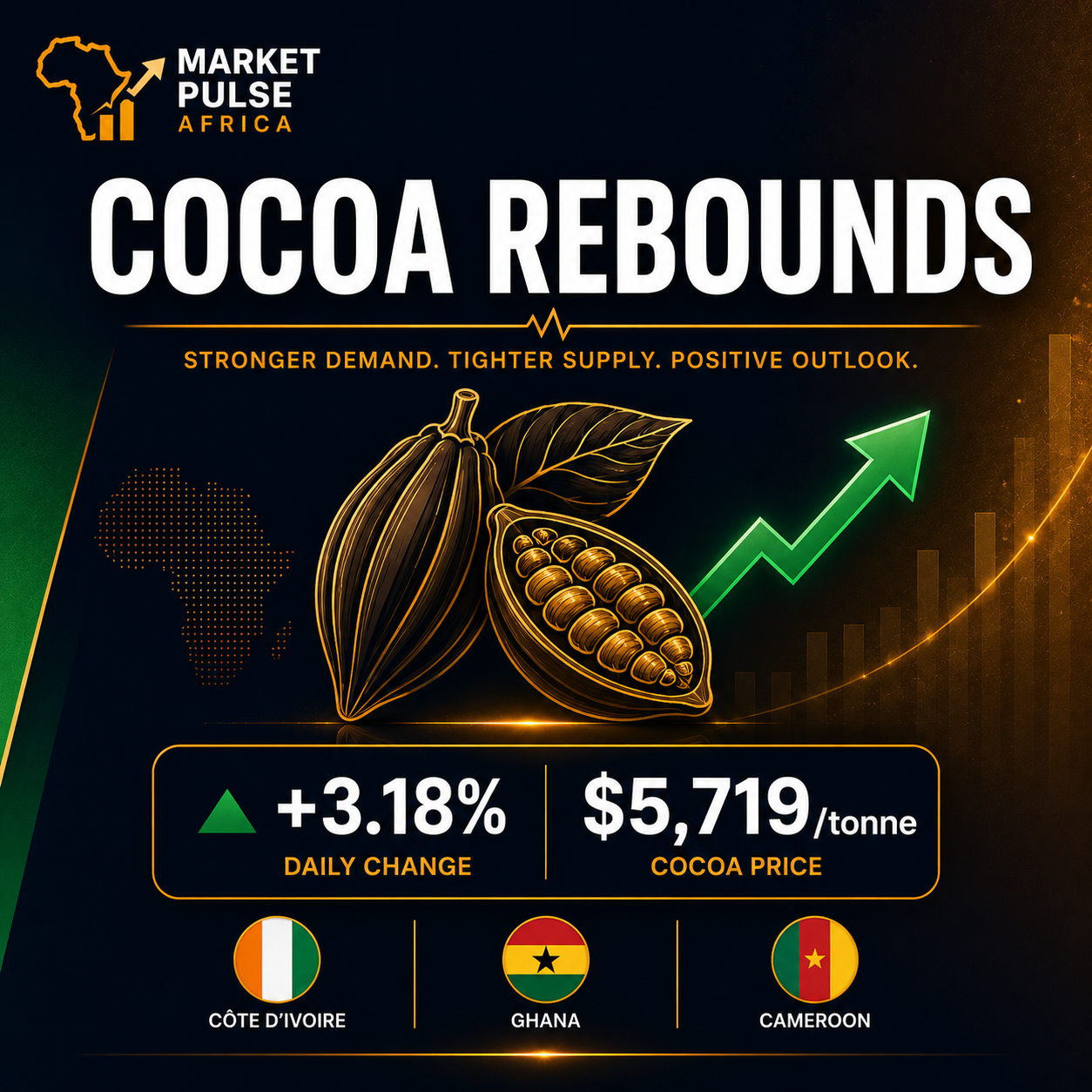
Cocoa & Agricultural Exports: West Africa's Supply Crisis Reshapes Global Trade
Cocoa prices surged nearly 10% after Ghana projected lower production for the 2026/27 season, raising fresh concerns over global supply. Discover how West Africa's cocoa crisis is reshaping agricultural exports, commodity markets and international trade.
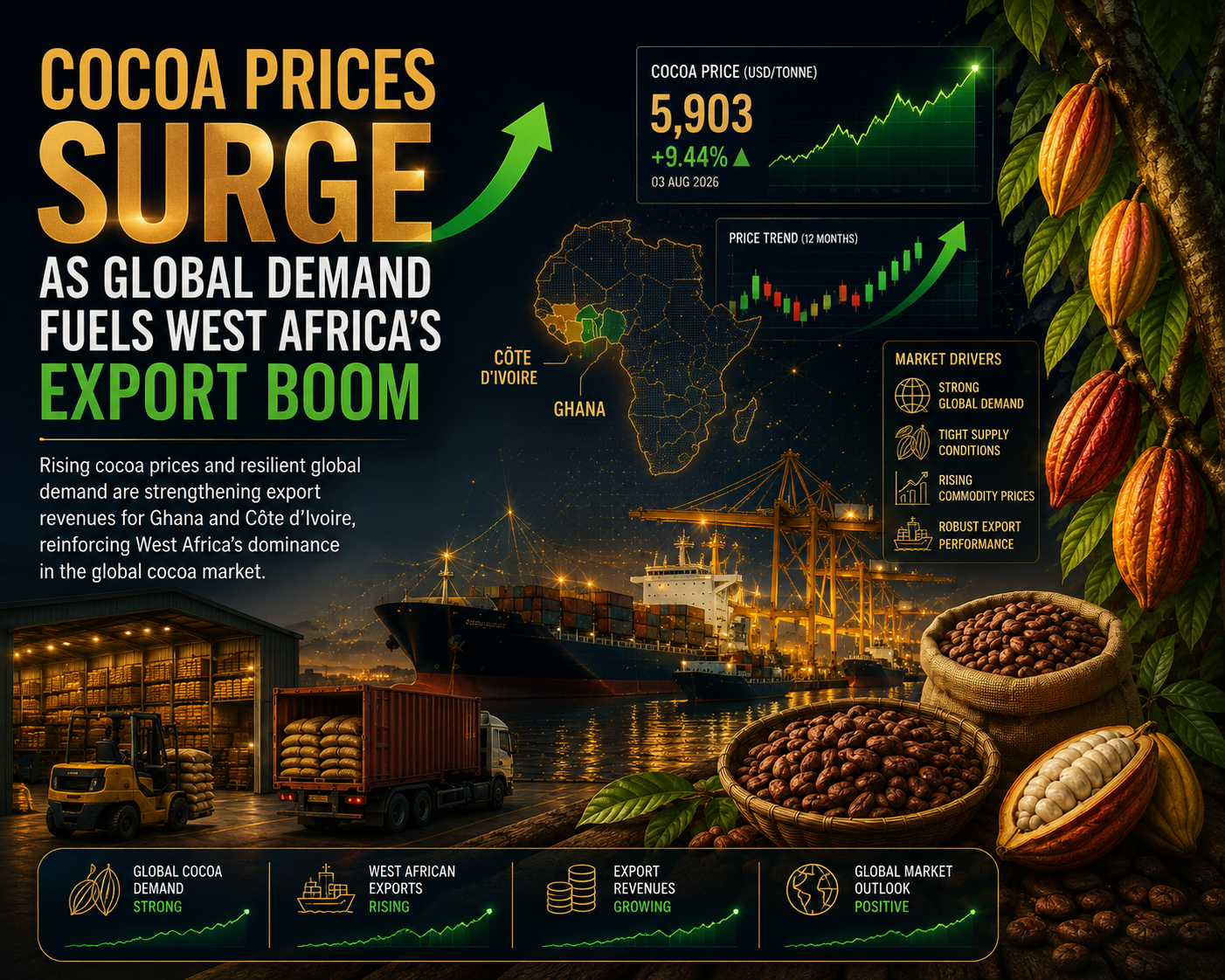
Cocoa & Agricultural Exports: West Africa's Supply Crisis Reshapes Global Trade
Executive Summary
West Africa's cocoa industry is facing renewed pressure as production concerns in Ghana drive global prices sharply higher. Cocoa futures surged 9.44% to $5,903 per tonne on 3 August 2026, extending gains to more than 57% year-over-year.
With Ghana and Côte d'Ivoire producing more than 60% of the world's cocoa, declining harvests are tightening global supply, increasing costs for manufacturers, and reshaping agricultural trade flows. The rally underscores the growing impact of climate risks, aging plantations and supply chain constraints on one of Africa's most valuable export commodities.
Cocoa Prices Surge on Supply Concerns
Ghana's Production Outlook Sparks Market Rally
Cocoa futures posted one of their strongest daily gains of the year after Ghana projected a sharp decline in cocoa production for the 2026/27 season.
The September 2026 cocoa contract climbed 9.44%, rising $509 to close at $5,903 per tonne on 3 August. The move reflected growing concerns that reduced harvests in West Africa could further tighten global supplies.
Metric | Value |
|---|---|
Cocoa (September 2026) | $5,903/t |
Daily Change | +9.44% (+$509) |
Year-on-Year Change | +57.21% |
Previous Close | $5,394/t |
The price increase follows months of volatile trading as weather conditions and production forecasts continue to influence global commodity markets.
West Africa Remains at the Centre of Global Supply
Ghana and Côte d'Ivoire Dominate Production
Ghana and Côte d'Ivoire remain the backbone of the global cocoa industry, accounting for more than 60% of worldwide production.
However, both countries continue to face significant production challenges, including:
Unpredictable weather patterns
Aging cocoa plantations
Crop diseases and pests
Rising production costs
Structural underinvestment in the sector
These factors have reduced expected harvest volumes and increased uncertainty across international commodity markets.
International Markets React
Rising Prices Extend Beyond Africa
The cocoa rally has influenced pricing well beyond West Africa.
Indonesia raised its August 2026 cocoa reference price to $5,424.96 per metric tonne, representing a 36.66% increase from the previous pricing period.
The country's cocoa export benchmark (HPE) also increased significantly, reflecting tighter global supply and stronger international demand.
The developments highlight how production challenges in West Africa continue to influence global agricultural trade and pricing.
What It Means for Businesses
Higher Costs Across the Supply Chain
The surge in cocoa prices has significant implications for manufacturers, exporters and international buyers.
Chocolate producers and food manufacturers are likely to experience higher raw material costs, while exporters may benefit from stronger prices despite lower production volumes.
Businesses operating across agriculture and logistics should prepare for:
Higher commodity price volatility
Increased procurement costs
Supply chain disruptions
Pressure on manufacturing margins
Greater focus on sustainable sourcing
Governments in major producing countries will also need to balance higher export prices against declining production volumes that could reduce total export earnings.
Market Snapshot
Indicator | Value |
|---|---|
Cocoa Price | $5,903/t |
Daily Change | +9.44% |
Year-on-Year Gain | +57.21% |
Ghana Outlook | Lower Production Forecast |
Global Supply | Under Pressure |
Market Trend | Bullish |
Why It Matters
Cocoa is one of Africa's most strategically important agricultural exports and a vital source of foreign exchange for several West African economies.
Persistent supply shortages could keep prices elevated throughout the remainder of 2026, creating opportunities for exporters but increasing costs for manufacturers worldwide.
For investors, agribusinesses and supply chain managers, the cocoa market has become an important indicator of agricultural resilience, climate risk and trade dynamics across Africa.
Read More
To understand the broader market trends affecting Africa's economy, explore these related articles on Market Pulse Africa:
Commodities Focus: Brent Falls, Gold Holds Above $4,000, Cocoa Surges
BRVM Market Brief: West Africa's Regional Exchange Steady Amid Consolidation
African Forex Watch: Naira Stabilises, Rand Under Pressure, Shilling Steady
Central Bank & Inflation Watch: Nigeria, South Africa and Kenya Hold Rates Steady
African Fintech & VC Funding: Climate Tech Overtakes Fintech