
Ghana Raw Mineral Export Ban by 2030: What Mahama's Plan Means for Manganese, Bauxite and Lithium
Ghana's raw mineral export ban is set for 2030. What Mahama announced, which minerals are covered, what miners must build, and how markets may react.
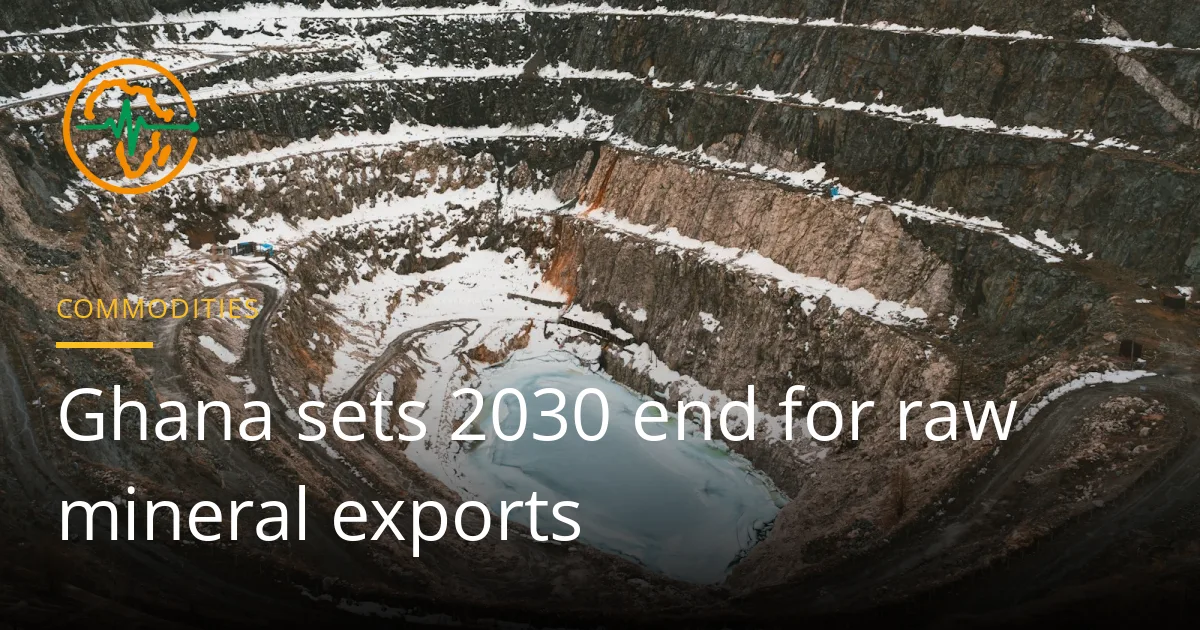
Ghana wants to stop exporting unprocessed minerals by 2030. President John Dramani Mahama set the target on Monday, 19 October, at the Mining in Motion Summit in Accra, saying companies that want access to Ghana's deposits will have to invest in processing them at home, Nairametrics reports.
"I've set a clear goal that by 2030, raw minerals should no longer leave our shores," Mahama said. The plan is a stated policy goal, not yet a law, and no detailed timetable or legal instrument has been published. For investors in Ghana's mining sector, it still changes the questions worth asking.
What the Ghana raw mineral export ban would cover
Mahama named the minerals he has in mind. "Our bauxite, manganese, iron, lithium and other minerals must support processing and industrial development here at home," he said.
The obligations would be written into mineral agreements. "Investors must understand the processing obligations associated with access to our resources," Mahama told the summit.
Manganese is the clearest test case. Ghana is the world's third-largest manganese exporter, with about 10% of global mined supply, according to US Geological Survey figures cited by Nairametrics. Manganese goes into steel and batteries, and most of Ghana's output currently leaves as ore.
Gold shows how the policy works in practice
Ghana has already taken several steps in its largest mineral, gold, which offer a preview of how a wider ban might be enforced.
- Doré export ban: since 1 September 2026, unrefined gold doré bought through approved artisanal and small-scale mining channels cannot be exported. Under a Ghana Gold Board (GoldBod) directive, licensed aggregators must have it refined at designated facilities in Ghana first.
- State purchases: from 1 July 2026, GoldBod began buying 30% of large-scale miners' gold output under an agreement with the Ghana Chamber of Mines, up from an earlier 20% target.
- Price-linked royalties: gold royalties now range from 5% to 12%, with the top rate applying when international prices reach about $4,500 an ounce.
Ghana has also restricted exports of iron scrap and non-ferrous metals, according to Nairametrics.
Part of a wider African trend
Ghana is not acting alone. Nairametrics lists similar moves across the continent:
- Guinea is considering restrictions on bauxite exports.
- Zimbabwe is moving to ban exports of lithium concentrate.
- The Democratic Republic of Congo has limited cobalt exports.
- Guinea, Burkina Faso, Mali and Côte d'Ivoire have set up or plan gold refineries.
The common goal is to capture more of the value that is currently added abroad. We looked at the bargaining position behind these policies in The new scramble for Africa: the minerals are African, the power is somewhere else.
What investors and traders should watch
An export ban five years out does not move prices today, but it does affect how mining projects are valued. Four things will decide whether Ghana's target is credible.
1. The legal instrument
So far there is a speech, not a regulation. The details that matter, such as which products count as "processed", whether concentrates qualify, and whether existing mining leases are covered, have not been published.
2. Power and capital
Processing bauxite into alumina, or manganese ore into alloys, takes large amounts of reliable, affordable electricity and billions of dollars in plant. Investors will look for evidence that power supply and financing can match the 2030 date.
3. Existing contracts
Miners with current export arrangements will want to know whether the obligations apply only to new agreements or are retrofitted. Mahama's comment that processing duties will be written into mineral agreements suggests new and renegotiated deals will carry them.
4. Supply effects
If a 10% supplier of mined manganese restricts ore exports without processing capacity ready, buyers would need other sources. That risk is years away, but long-term offtake contracts signed now will need to account for it.
The bottom line
Ghana is betting that its resources are valuable enough for investors to accept processing obligations as the price of access. Its gold policies show the government is willing to act, but gold is easier to refine locally than bauxite or manganese. The next signal will be whether a draft law or regulation follows the speech, and how quickly. Until then, the 2030 date is a direction of travel rather than a rule.