Ghosts of past subsidies haunt Nigeria’s petrol discount sale
Nigeria’s government has introduced a temporary petrol discount at NNPC retail stations and insists it is not a return to subsidy. Memories of the old regime, and political suspicion, still shape how the measure is received.
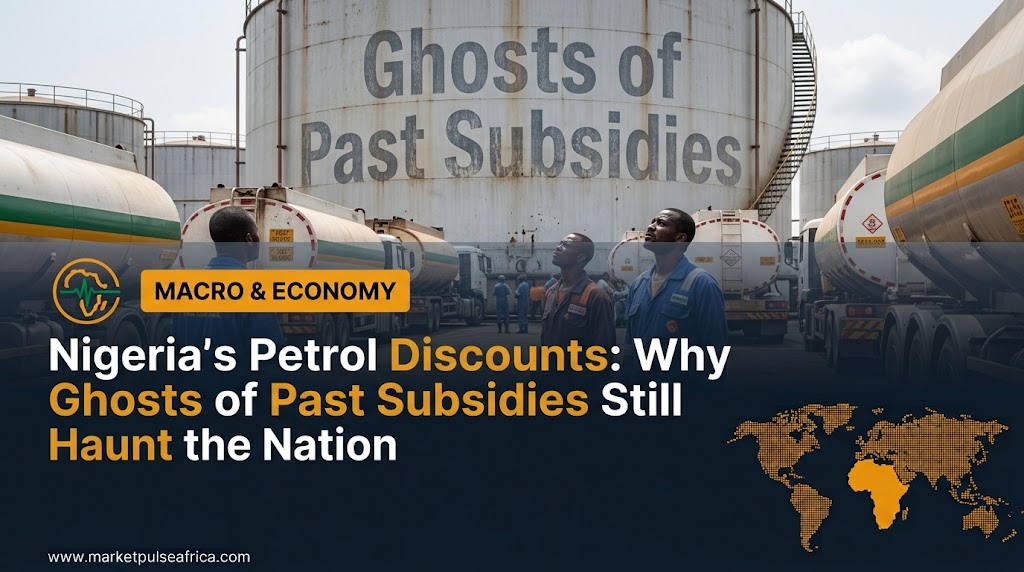
Nigeria’s government has spent three years insisting that cheap, state-funded petrol is gone for good. A month-long discount at the state oil company’s retail stations has nevertheless revived old arguments about subsidy by another name.
The Federal Government and the Nigerian National Petroleum Company Limited say the current arrangement is different. NNPC Retail is forgoing its profit margin and selling petrol at cost for an initial period of 30 days, with priority for public transporters. Finance Minister Taiwo Oyedele has stated repeatedly that no public funds from the federal budget or the Federation Account are involved. The discount, officials argue, comes solely from the retail margin. A negotiated ceiling of N1,350 per litre on the ex-gantry or landing cost is also under discussion and is intended to be reviewed monthly.
What the Government Says
Oyedele has drawn a clear distinction. A subsidy, he said, exists when government pays part of the price the consumer would otherwise pay, drawing on public revenue that could otherwise fund salaries, schools, hospitals and infrastructure. That regime ended in 2023 and is not returning. The present discount, by contrast, leaves the underlying market price intact while the retail arm absorbs a temporary reduction in its own margin. Pump prices at NNPC stations have been reported around N1,355 per litre in Lagos and Rivers and slightly higher in other centres.
The Presidency has framed the step as temporary relief against global oil-price shocks rather than a structural policy reversal. Officials stress that the measure does not restore a blanket subsidy and that doing so would create longer-term harm for short-term ease.
Why the Ghosts Persist
The political and public reaction shows how deeply the old subsidy regime still colours perception. For decades Nigeria maintained one of the most expensive fuel subsidy systems in the world. It produced scarcity, smuggling, opaque claims on the budget and repeated fiscal crises. When the Tinubu administration removed the subsidy in May 2023, it presented the decision as a definitive break with that cycle. Any subsequent price relief, even if financed differently, is therefore scrutinised for signs of backsliding.
Opposition figures have described the discount as a return to subsidy-style intervention through the back door and as a pre-election sweetener. Some have warned that limiting the cheaper product to NNPC stations could recreate the queues and safety risks associated with the previous system. The government rejects those characterisations, but the argument itself demonstrates that trust in the permanence of reform remains fragile.
Design and Risks
The technical design tries to avoid the classic subsidy traps. Because the discount is funded from the retail margin rather than the Federation Account, it does not directly reduce the oil revenue shared among the three tiers of government. Officials also argue that it does not create the same incentive for large-scale smuggling that a nationwide below-market price once did.
Yet the arrangement is not risk-free. A temporary measure can create expectations of extension. A price ceiling, even if negotiated rather than imposed by fiat, can distort commercial behaviour if market conditions move against it. Concentration of the cheaper product at NNPC outlets can generate local shortages or long queues if demand shifts sharply. Monitoring whether the discount remains confined to the stated margin, and whether it ends on schedule, will be essential if the government is to preserve the credibility of the 2023 reform.
Broader Context
The discount arrives against a backdrop of elevated living costs and public sensitivity to transport and energy prices. Global oil market disruptions have pushed pump prices higher. Households and commercial operators have felt the pressure. Targeted relief is politically attractive. The challenge is to deliver that relief without reopening the fiscal and market distortions that made the old subsidy unsustainable.
Nigeria’s experience shows that the difference between a genuine market-based discount and a de facto subsidy is not only accounting. It is also institutional discipline and public communication. If the current measure remains temporary, transparent and self-financed by the retail margin, it can serve as short-term relief without undoing the larger reform. If it expands, lengthens or begins to draw on public revenue, the ghosts of the past subsidy regime will appear fully justified.
The government has drawn the distinction clearly on paper. Implementation over the coming weeks will determine whether the public, investors and markets accept that distinction or continue to see the discount as subsidy by another name.