
JSE Market Brief: Rate Hold, Oil Pressure and Resource Stocks
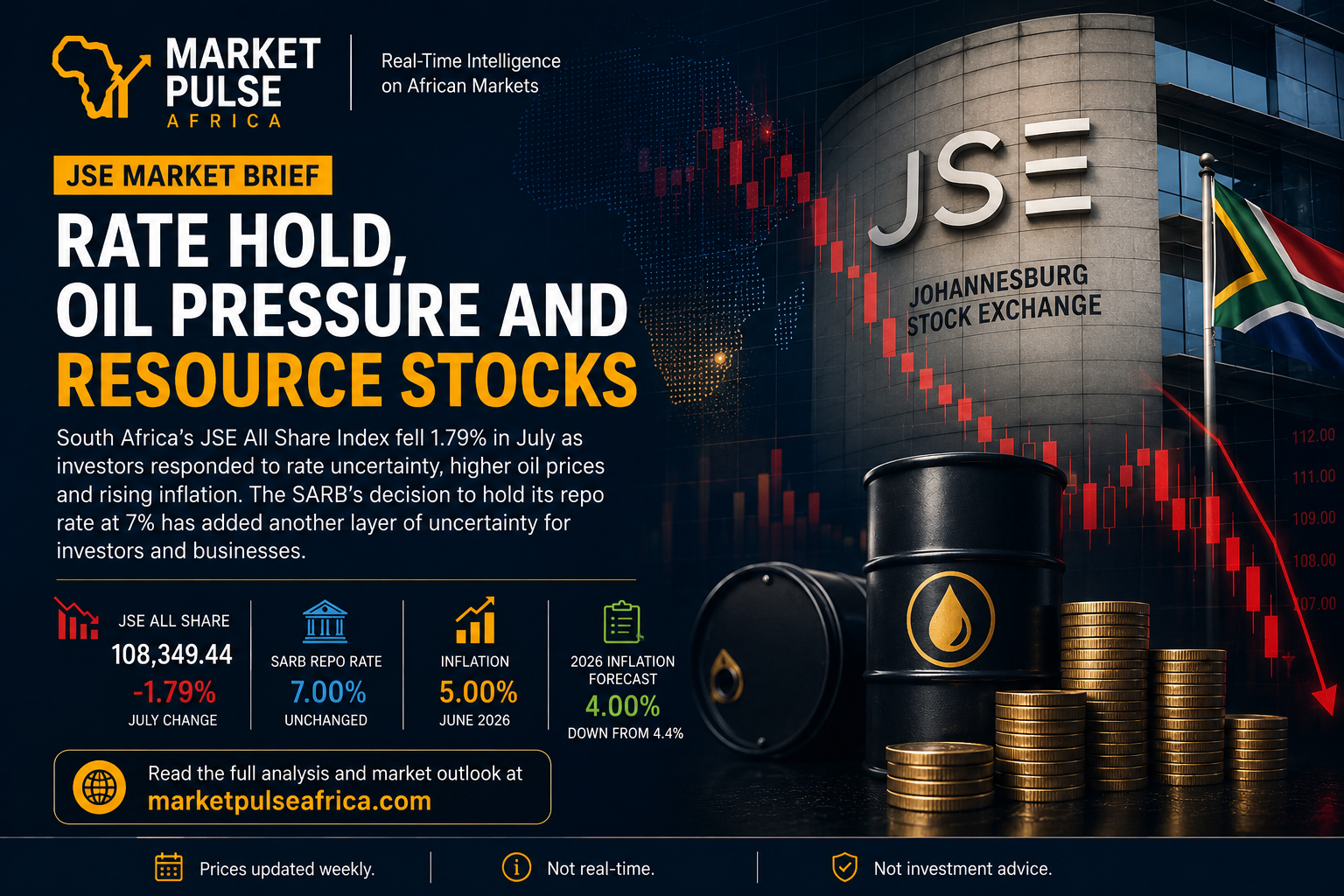
South Africa's JSE All Share Index fell 1.79% in July as investors responded to rate uncertainty, higher oil prices and rising inflation. The SARB's decision to hold its repo rate at 7% has added another layer of uncertainty for investors and businesses.
JSE Market Brief: Rate Hold, Oil Pressure and Resource Stocks
Executive Summary
The Johannesburg Stock Exchange came under pressure in late July as investors assessed rising inflation, higher oil prices and an unexpected decision by the South African Reserve Bank to keep interest rates unchanged.
The JSE All Share Index declined 1.79% to 108,349.44 on July 31, while the SARB maintained its repo rate at 7.00%.
JSE All Share Under Pressure
The JSE All Share Index fell 1.79% during July, closing at 108,349.44 on July 31.
The decline reflected pressure from rising costs, uncertainty over monetary policy and movements in global commodity markets.
SARB Holds at 7%
The South African Reserve Bank unexpectedly maintained its repo rate at 7.00% on July 23.
The decision was reached by a 4-2 vote, with two members supporting a rate increase.
The central bank's cautious stance reflects concerns that inflationary pressures could persist.
Inflation Reaches 5%
South African headline inflation accelerated to 5.0% in June, up from 4.5% in May.
Higher fuel costs were among the main contributors.
The SARB nevertheless revised its 2026 average inflation forecast down to 4.0% from 4.4%.
Market Data
Metric | Value |
|---|---|
JSE All Share | 108,349.44 |
July Change | -1.79% |
SARB Repo Rate | 7.00% |
Inflation | 5.00% |
2026 Inflation Forecast | 4.00% |
Why It Matters
Higher borrowing costs can affect corporate investment, consumer demand and business expansion.
At the same time, a weaker rand and higher energy costs can increase operating expenses for South African companies, making monetary policy an important factor for investors and businesses.