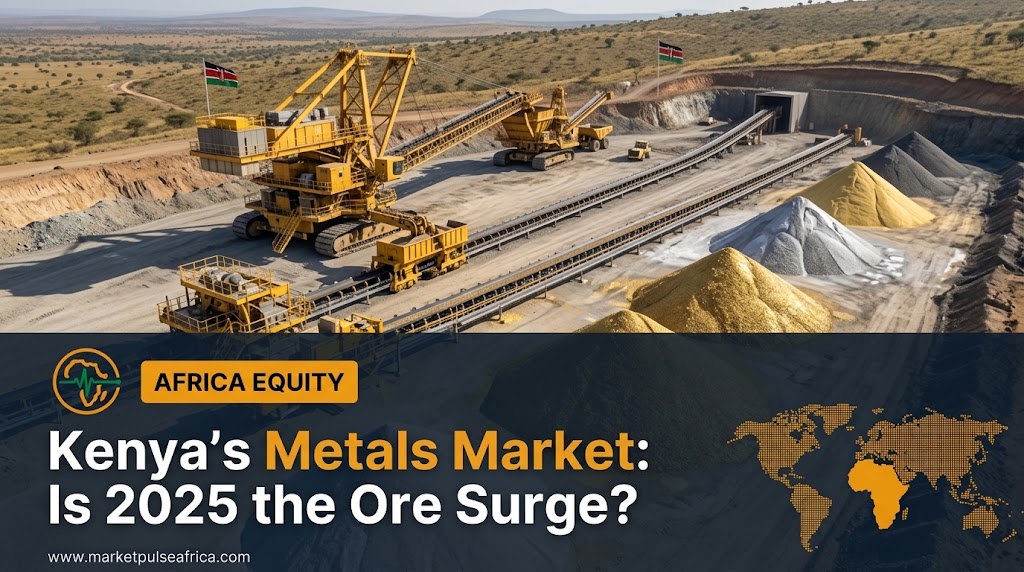
Kenya: Ores and metals exports (% of merchandise exports), 2025
Ores and metals accounted for 5.1% of Kenya’s merchandise exports in 2024. No official figure for 2025 has been published yet. Food and manufactures continue to dominate the export basket.
Kenya’s merchandise exports are led by food products and manufactures. Ores and metals form a smaller but steady component of the trade structure.
In 2024, ores and metals made up 5.1% of total merchandise exports. The figure is drawn from World Bank-compatible compilations that break down exports into major product groups. Food products held the largest share at 49.2%, followed by manufactures at 30.7% and agricultural raw materials at 12.9%. Fuels contributed only 1.6%.
Latest Available Data
The 2024 share of 5.1% sits close to the 5.32% recorded in 2023. Earlier years show modest variation, with the indicator generally remaining in the low-to-mid single digits. No official World Bank or national statistical release has yet published the equivalent percentage for 2025.
The indicator covers commodities in the Standard International Trade Classification sections for crude fertilisers and minerals, metalliferous ores and scrap, and non-ferrous metals. It excludes fuels and most agricultural products.
Structure of Kenya’s Export Basket
Kenya’s trade profile differs from many resource-heavy African economies. Food and agricultural products, including tea, horticulture and coffee, generate the largest share of export earnings. Manufactures, including textiles and processed goods, form the second pillar.
Ores and metals occupy a secondary position. Their contribution is large enough to matter for diversification discussions but remains well below the levels seen in mineral-dependent countries such as Zambia or the Democratic Republic of the Congo. The relatively balanced structure reduces exposure to single-commodity price shocks while still leaving room for growth in mining-related exports.
Context and Comparisons
A 5.1% share places Kenya in the middle range among non-oil African exporters. Countries with large-scale mining operations routinely record ores-and-metals shares above 30% or higher. Kenya’s lower figure reflects both limited large-scale metal production and the strength of its agricultural and manufacturing base.
Any future rise in the ores-and-metals share would depend on new mining projects, processing capacity and global demand for the specific minerals Kenya produces. Until 2025 data appear, the 2024 figure of 5.1% remains the most recent benchmark.
Outlook
Policymakers and analysts tracking export diversification will watch the next release of this indicator. A sustained move higher would signal growing contribution from the mining sector. Stability around the current level would confirm that food and manufactures continue to anchor Kenya’s merchandise exports.
The absence of a published 2025 figure means assessments of the latest year must rely on the 2024 data and on broader trade reports until official updates become available.