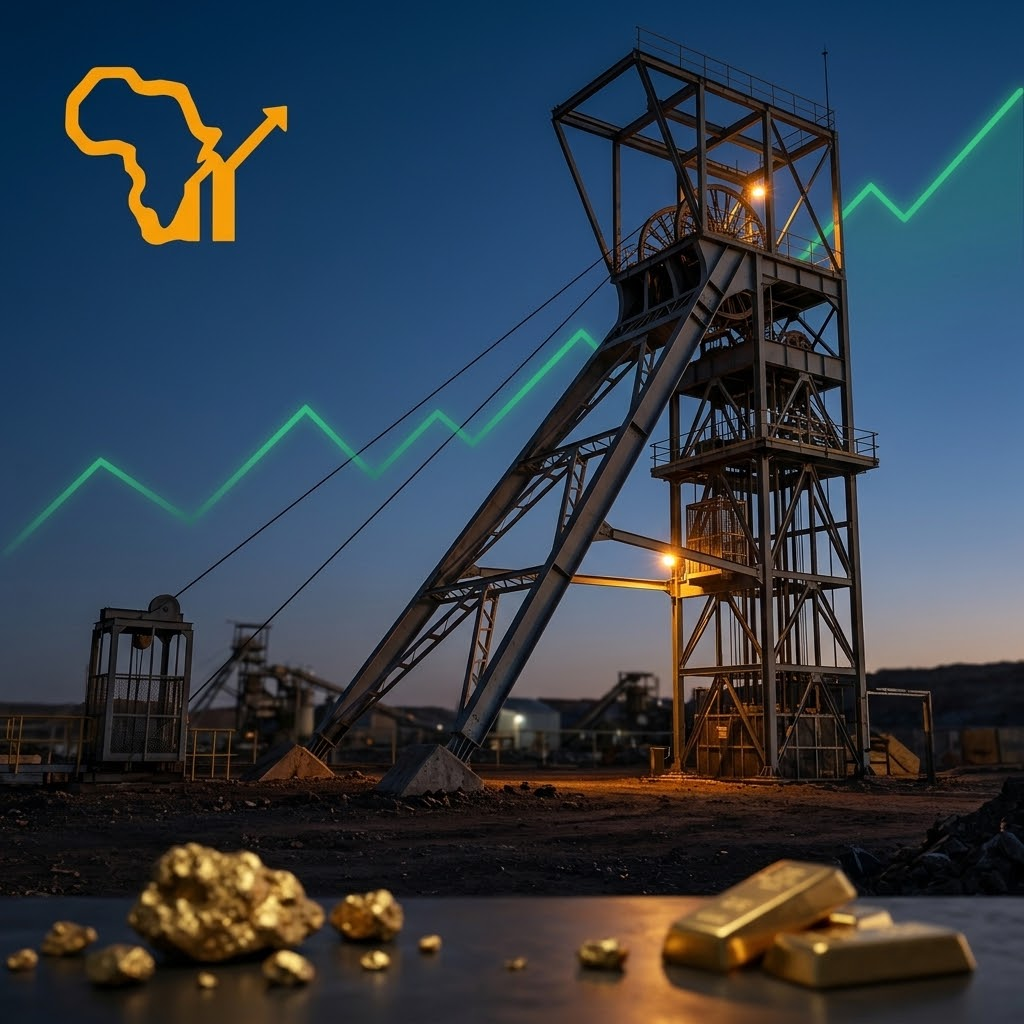
Q&A: Sandvik Australia’s Craig Johnston on the technologies reshaping mining
Sandvik's automation and electrification push offers lessons for African mining, where technology adoption already shapes export revenue and jobs.

Automation, Electrification and Digital Mining: What Sandvik's Australia Playbook Means for African Producers
A recent Q&A with Sandvik Australia sales area vice president Craig Johnston, published ahead of IMARC 2026, offers a useful window into where global mining technology is heading — automation, digitalisation and electrification — and why African mining jurisdictions, several of which are already deep into their own automation push, have a direct stake in that trajectory.
What Johnston Said About the Technology Shift
Johnston, who leads Sandvik's sales operations across Australia, New Zealand and Papua New Guinea, described Australia as one of the most competitive mining markets globally and positioned the company's equipment, aftermarket support, and expanding digital and automation portfolio as central to serving that market going forward. He framed Sandvik's ambition in terms of partnership rather than pure equipment supply, saying the company aims to help customers "unlock value through data, connectivity and advanced solutions" rather than simply selling machines. Johnston also pointed to Australia's role as an early-adopter market whose innovations tend to spread globally afterward. Mining Technology
The Three Pillars: Automation, Digitalisation, Electrification
The Q&A centers on three converging trends reshaping mine operations worldwide:
Automation — remote and autonomous drilling, loading and hauling systems that let operators run equipment from control rooms rather than the pit face.
Digitalisation — data-driven fleet monitoring and predictive maintenance that flags mechanical issues before they cause downtime.
Electrification — battery-electric vehicles (BEVs) replacing diesel fleets, particularly underground, where ventilation and heat management costs are significant.
These aren't hypothetical for Africa. Sandvik's automation and digital tools have already been deployed across African operations in Ghana, Mali, the Democratic Republic of Congo, Zambia, Botswana, South Africa and Zimbabwe, and company executives have previously argued that some of Africa's greenfield mining projects rank among the most sophisticated automation adopters globally, precisely because they can build automation in from the ground up rather than retrofit it.
Historical Context: Africa Was Never a Laggard Here
It's a common assumption that advanced mining technology arrives in Africa last. The data doesn't support that. Sandvik West Africa leadership has previously noted that greenfield projects across the continent often start with automation as a design principle rather than an afterthought — a structural advantage over older brownfield operations elsewhere that must retrofit automation onto legacy infrastructure. Southern African operations, in particular, have used Sandvik's AI-driven predictive maintenance tools, drawing on sensor data from loaders and trucks to flag mechanical problems before failure.
More recently, Sandvik has continued expanding its footprint in the region: a 2026 supply agreement tied to Zimplats' Ngezi operation in Zimbabwe — supporting the mine's transition from open-pit to underground extraction — underscored the company's deepening role in Southern Africa's platinum sector, combining new equipment orders with aftermarket parts and service support. Sandvik also used Electra Mining Africa 2026 to showcase crushing and screening technology alongside continent-wide technical support and digital monitoring platforms, aimed at both new and existing crushing circuits.
Why It Matters for Africa
Mining remains one of the largest sources of export revenue, government fiscal income and formal employment across much of Sub-Saharan Africa — from Zambian and DRC copper to Ghanaian and South African gold, South African platinum, and Guinean bauxite. Technology adoption in this sector has direct macroeconomic consequences:
Productivity and export revenue. Automated fleets and predictive maintenance reduce unplanned downtime, which directly affects ore output and, by extension, export earnings and foreign-exchange inflows for producer countries.
Cost structure and margins. Battery-electric vehicles reduce diesel consumption and ventilation costs in underground mines — a meaningful line item given that energy costs are a significant share of operating expenses at many African underground operations.
Employment composition. Digitalisation is shifting labor demand toward remote-operation and data-analytics roles rather than traditional coal-face labor, a transition that has workforce and skills-training implications for mining economies.
Investment competitiveness. Mining jurisdictions that can demonstrate modern, technology-enabled operations — improving both safety records and cost efficiency — are generally more attractive to the institutional capital that funds new mine development.
What Investors and Mining Businesses Should Watch
Participants in African mining and related equity or commodity exposure may want to track a few developments tied to this technology shift:
New automation and electrification contracts signed by major equipment suppliers (Sandvik, Epiroc, Caterpillar) with African mining houses, as a signal of capex direction.
Capital expenditure guidance from listed African miners on automation, digital monitoring, or BEV fleet transitions.
Safety and productivity disclosures in company reporting, which increasingly reference technology adoption as a driver of operational performance.
Regional mining events — such as Electra Mining Africa and the Investing in African Mining Indaba — where new technology partnerships are frequently announced.
Key Takeaways
For Businesses
Track technology partnership announcements from major mining equipment suppliers operating in your market.
Assess how automation and electrification investments affect operating cost structures relative to competitors.
For Investors
Monitor listed miners' capex disclosures for automation and digitalisation spend.
Consider how technology adoption affects the cost curve and margin resilience of specific producers during commodity price cycles.
For General Readers
Understand that mining automation shifts labor demand rather than eliminating it outright, creating new categories of technical employment.
Follow how technology adoption intersects with safety outcomes at major regional operations.
How MarketPulse Africa Helps
For readers tracking how global mining technology trends intersect with African commodity producers, MarketPulse Africa's Commodities coverage brings together production data, equipment and investment announcements, and the operational shifts affecting Africa's mining-dependent economies in one place. As automation and electrification continue reshaping cost structures across the sector, MarketPulse Africa will keep tracking what it means for producers, investors and the countries whose export revenues depend on them.
Conclusion
Craig Johnston's comments on Sandvik's technology roadmap in Australia are a reminder that the automation, digitalisation and electrification trends reshaping global mining aren't confined to any one region — and African mining jurisdictions, several of which have been early and aggressive adopters, have real economic exposure to how quickly and effectively these technologies scale. For a continent where mining underpins export earnings, fiscal revenue and employment in multiple economies, the pace of this technology shift is worth watching closely. Follow MarketPulse Africa for continued coverage and real-time intelligence on African markets.