About Market Pulse Africa: What We Cover and How We Report
Market Pulse Africa covers African equities, commodities, currencies, exchange indices, macroeconomics and investment signals. Here is what we publish, how we handle market data, and who it is for.

Market Pulse Africa is a business and markets publication that tracks African stock exchanges, commodity prices, currencies, macroeconomic data and investment trends, and translates them into news and analysis that investors, analysts and business leaders can act on. The continent is large and fragmented. Its markets trade in dozens of currencies, its growth is spread across more than fifty economies, and its most important stories often break in one country before they reach regional or global headlines. Our job is to bring that activity into one place, explain what it means, and show where the numbers come from. This article describes what we cover, how our coverage is organized, how we handle market data, and what readers can expect from us. It is a guide to the publication as much as an introduction to Africa's markets, and it is meant to help new readers decide where to start.
Contents
- Why Market Pulse Africa exists
- How our coverage is organized
- African Equities
- Commodities
- Currencies and Forex
- Exchange Indices
- Macro and Economy
- Investment Signals
- Weekly Pulse
- How we handle market data
- How we write and source our stories
- Regional focus
- Themes we follow closely
- Who reads us and why
- What comes next
Why Market Pulse Africa exists
Financial information about Africa is scattered. A company results announcement may appear in a Lagos newspaper, a commodity price in a trade journal, a central bank decision on a regional wire service, and a policy change in a government gazette. Each piece matters, but few readers have time to follow all of them. An investor deciding whether to buy shares on the Nigerian Exchange, a trader watching cocoa or crude oil, or a corporate treasurer managing exposure to the naira or the CFA franc needs context that connects those pieces.
Market Pulse Africa exists to provide that context. We cover the markets and the economies behind them, with a focus on what changes prices, returns and risks. We aim to be a daily reference for readers who make decisions about African assets, and a clear guide for readers who are new to the continent's financial system.
How our coverage is organized
Our content is grouped into seven categories. Each reflects a different way of looking at the market, and together they cover the path from raw data to investment decisions. Readers who want a specific area can go straight to it. Readers who want the full picture can follow all seven.
The categories are African Equities, Commodities, Currencies and Forex, Exchange Indices, Investment Signals, Macro and Economy, and Weekly Pulse. The sections below describe what each one covers and what readers typically find there.
African Equities
The African Equities desk follows listed companies across the continent. That includes results announcements, dividend decisions, rights issues, initial public offerings, mergers and acquisitions, and changes in corporate governance. Much of our recent coverage has focused on the Nigerian Exchange, where market capitalization movements, sector rotations and large-cap moves can shift the broader market in a single session. We also follow listings and trading activity in Kenya, South Africa and the francophone markets of the BRVM, as well as the companies that drive them.
Equity coverage is about more than price moves. We look at why a stock moved, what the company disclosed, and what the change means for investors who hold it or are considering buying. A reader who follows our equity coverage should be able to tell the difference between a headline gain driven by a one-off item and a gain backed by earnings growth.
Commodities
Commodities matter enormously in Africa. Many economies depend on exporting a small number of raw materials, and their currencies, government budgets and growth rates often rise and fall with those prices. Our Commodities desk covers oil and gas, gold, copper, cobalt, lithium, cocoa, coffee, cotton, palm oil and other products that shape the continent's export earnings.
We also publish data-driven pieces that show how each country's export mix has changed. Recent examples have looked at the share of ores and metals in merchandise exports for countries including Kenya, Ghana and Angola, and at food and fuel exports for economies such as the Democratic Republic of Congo, Ghana and Egypt. These pieces help readers see which economies depend most on commodities, and how exposed they may be to price swings.
Currencies and Forex
Currency movements can make or break a return on an African investment. A stock that gains 20 percent in local currency can be a loss for a dollar-based investor if the currency falls by more than that. Our Currencies and Forex coverage follows the naira, the cedi, the Kenyan shilling, the South African rand, the CFA franc and other currencies that matter to investors and businesses.
We cover the policy decisions behind currency moves, including exchange rate adjustments, central bank interventions and foreign exchange market reforms. We also track forecasts from banks, companies and government bodies, because those projections shape expectations for trade, pricing and investment. When a company or institution publishes a currency outlook, we look at its assumptions and compare them with the data.
Exchange Indices
Stock market indices give investors a quick read on how a market is performing, and they are a common benchmark for funds and portfolios. Our Exchange Indices desk tracks the major benchmarks across the continent, including the Nigerian All Share Index, the NSE indices in Kenya, the Johannesburg Stock Exchange and regional indices such as the BRVM Composite.
Index coverage explains what moved the market and why. A fall in a broad index can reflect weakness in banking stocks, a slide in a single large company or a broader sell-off. We look at the composition of each index, the sectors driving the move, and how much of the change is concentrated in a few names. That helps readers judge whether a move is broad-based or narrow.
Macro and Economy
The Macro and Economy desk covers the big forces that shape markets over months and years: growth, inflation, interest rates, fiscal policy, debt, trade and monetary policy. We report on decisions by central banks such as the Central Bank of Nigeria, the South African Reserve Bank and the Central Bank of Kenya, and on the forecasts of institutions including the International Monetary Fund and the World Bank.
We also publish indicator briefs drawn from World Bank data, such as foreign direct investment inflows, merchandise export shares and other measures of economic structure. These briefs are designed to give readers a clear, sourced view of a country's economy, with the data year and source stated. They are useful for comparing economies, tracking change over time and checking whether a headline claim holds up.
Investment Signals
Investment Signals is where we connect market developments to investment questions. This is our analysis desk, covering themes such as growth markets, initial public offerings, sector trends, fintech, energy transition, critical minerals and capital flows. Recent work has looked at which African economies are expected to grow fastest, how a large retail IPO is structured and what risks investors should weigh, and how the IMF's warnings about artificial intelligence might play out for African labor markets.
Signals are not recommendations. We do not tell readers what to buy or sell. We set out the evidence, explain the assumptions, and point to the risks, so that readers can make their own decisions. Where a view is ours, we say so, and where a claim comes from a company or institution, we attribute it.
Weekly Pulse
Weekly Pulse is our recurring roundup of the week's most important stories across the continent. It brings together market moves, corporate news, policy decisions and economic data, so readers who cannot follow every day can still keep up. The roundup also highlights what to watch in the week ahead, from scheduled central bank decisions to results announcements and key data releases.
How we handle market data
Market prices are the most sensitive part of what we publish. People trade on them, and a stale or wrong price can cost real money. For that reason we treat commodity prices with a stricter standard than ordinary articles. Every price must come from a named exchange or price reporting agency, must carry the date it was quoted, and must refer to the unit and grade stated. We do not carry a figure over from a different unit, a different currency or a different contract month. And we do not show a price as current unless we can source it today.
If we cannot confirm a price, we do not publish it. That rule is more important than publishing speed. A late price is an inconvenience. A stale price presented as current is misleading, and our readers rely on us not to make that mistake.
How we write and source our stories
Our articles are written to be read by people, first and foremost. We aim for clear headlines, short paragraphs and direct answers in the opening lines, followed by context, figures and sources. We use headings to help readers find what they need, and we include internal links to related coverage so that a single story leads to the wider picture.
We also write with search in mind. Readers find business news through search engines, and we want the right readers to find our work. That means choosing headlines and descriptions that match what people are looking for, keeping URLs short and descriptive, and writing alt text for images so that screen readers and search engines can understand them. None of that replaces good reporting, and we do not write for search at the expense of accuracy.
Sourcing is central to how we work. We attribute claims to the company, institution or report they come from, and we link to primary sources where we can. When sources disagree, we say so. When a figure is an estimate or a forecast, we say that too. Our drafts go through a review step before anything is published, so that a single error does not reach our readers.
Regional focus
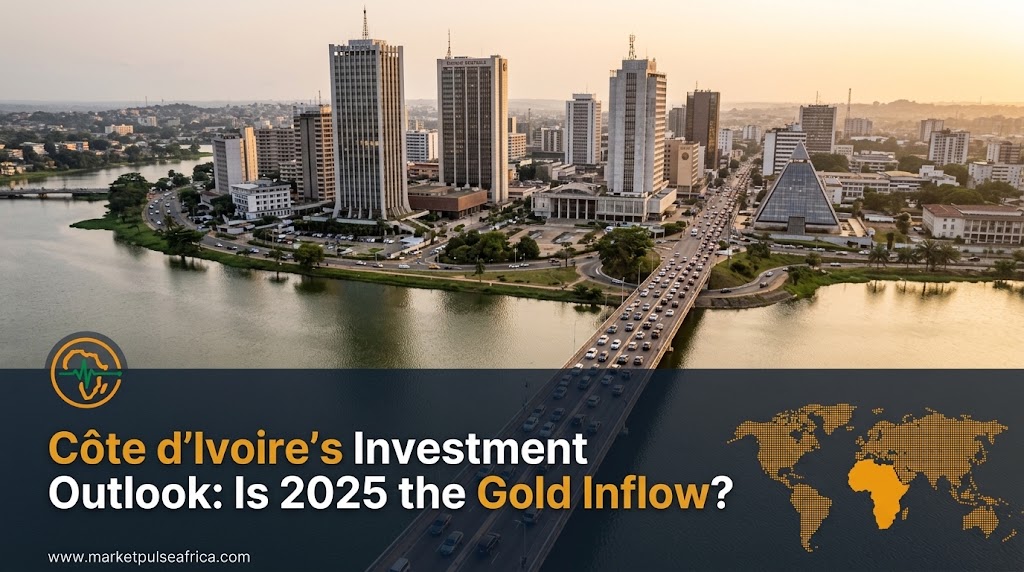
Africa is not one market, and our coverage reflects that. West Africa is a major focus, with coverage of Nigeria's listed companies, the naira, the Dangote refinery and the energy sector, and the francophone economies that use the CFA franc, including Côte d'Ivoire and other members of the West African Economic and Monetary Union. We also cover Ghana, where the cedi and the Ghana Stock Exchange are regular topics.
East Africa is a second focus. Kenya's economy, its listed companies and its exports of ores and metals are regular subjects, and we follow the wider region's growth, infrastructure and trade. Southern Africa covers South Africa's markets and economy, with its structural challenges and the rand, along with Zambia, Angola and the Lobito Corridor infrastructure project. Central Africa, including the Democratic Republic of Congo and the CEMAC region, is covered through its commodities, trade and macroeconomic data. North Africa, including Egypt and Algeria, appears through energy exports, foreign investment and fiscal policy.
We do not treat any region as an afterthought. Smaller markets often get the least coverage elsewhere, and we aim to publish on them with the same care we bring to larger economies.
Themes we follow closely
A few themes run through much of our coverage. The first is the energy transition. Africa holds large reserves of the minerals needed for batteries and renewable power, and it is also a major producer of oil and gas. How the continent balances those roles will shape its exports, its budgets and its investment climate for decades. We cover solar mini-grids, renewable energy projects, critical minerals and the policy debates around them.
The second theme is financial inclusion and fintech. Mobile money, digital lending and payments platforms have changed how millions of Africans save, borrow and pay. We follow the companies behind those services, their growth, their funding rounds and the regulatory questions they raise.
The third theme is capital flows. Foreign direct investment, portfolio flows and foreign bank activity all shape what happens to African markets. We track which countries attract capital, which banks are expanding or retreating, and how shifts in global interest rates affect African borrowers and investors.
The fourth theme is governance and policy. Clear rules, predictable regulation and credible institutions matter to investors. We follow regulatory decisions by bodies such as the Securities and Exchange Commission in Nigeria, along with monetary policy, tax reform and corporate governance debates.
Who reads us and why
Our readers include individual investors who want to understand the markets they invest in, professionals who need reliable data and analysis for their work, business leaders tracking the economies where they operate, and students and researchers who study African finance. What they have in common is a need for information that is timely, sourced and easy to follow.
We want to be useful to people who are new to African markets as well as to those who have followed them for years. That means explaining terms and context without talking down to readers, and assuming that a reader can handle a number and its implications.
What comes next
Market Pulse Africa is still growing. We plan to expand our coverage of listed companies across more exchanges, deepen our commodity and macroeconomic data, and publish more analysis on the themes that matter most to investors. We also want to hear from readers. If you have a question about a market, a company or a policy, or a story you think we should cover, tell us in the comments. Your questions shape what we publish next.
Thank you for reading. Follow Market Pulse Africa for the stories behind Africa's markets, the numbers that move them and the signals worth watching.