Kenya Pipeline Company: Dangote Buys 25% Stake for $327 Million in NSE Block Trade
Aliko Dangote has bought 25% of Kenya Pipeline Company for about $327m in an NSE block trade, months after KPC's IPO. The price, the asset and the risks.
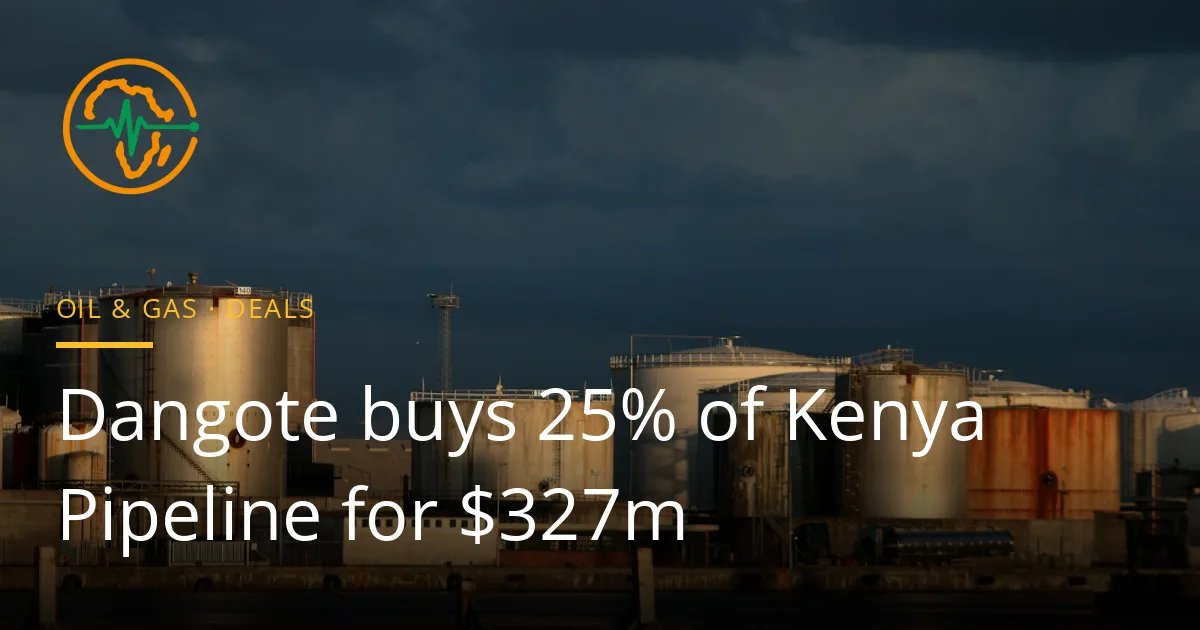
Aliko Dangote has bought a quarter of Kenya Pipeline Company (KPC), the business that moves most of East Africa's imported fuel inland from Mombasa. Dangote disclosed the purchase at an event in London on 21 October, as reported by Bloomberg and Nairametrics. The Nairobi Securities Exchange (NSE) had recorded a block trade of roughly 4.5 billion KPC shares earlier in the week, worth about KSh42.5 billion, or $327.4 million.
"We bought 25% of their pipeline network for the distribution of petroleum products," Dangote said.
The Kenya Pipeline Company deal in numbers
- Stake: 25% of KPC.
- Shares: about 4.5 billion, in a single block trade reported by the NSE.
- Value: about KSh42.5 billion, or $327.4 million, according to the NSE figure cited by Nairametrics.
- Implied price: about KSh9.44 a share (KSh42.5bn divided by 4.5bn shares). That is roughly 5% above the KSh9 IPO price.
- Company value: about KSh163.9 billion, per Nairametrics.
- Buyer: Dangote did not say which of his companies holds the stake.
The seller was not named in the reports. Kenya's government sold 65% of KPC in an initial public offering earlier this year and kept 35%.
A quick history of the KPC IPO
KPC was wholly state-owned until 2026. The IPO, run with Faida Investment Bank as lead transaction adviser, offered 65% of the company at KSh9 a share and aimed to raise about KSh106.3 billion (roughly $825 million), according to Dabafinance's January report. Trading on the NSE was scheduled to start on 9 March.
The allocation reserved 15% of the offer for oil marketing companies and 5% for employees, with the rest split evenly between local retail investors, local institutions, East African investors and foreign investors. That structure is important here: a 25% stake in one block suggests either a large investor sold out, or several holders combined into one trade. Neither has been confirmed.
What Dangote is buying
According to Nairametrics:
- KPC was set up in 1973 and started commercial operations in February 1978.
- It runs about 1,342 km of pipeline, plus depots, pumping stations and loading facilities.
- Its estimated handling capacity is 14 billion litres of petroleum products a year.
- It serves Kenya and supplies fuel onward to neighbouring East African countries.
The reports did not include KPC's revenue or profit, so investors cannot yet judge the price on earnings. Pipelines like KPC tend to earn regulated tariffs, which usually means steady cash flow but limited upside.
How it fits Dangote's East Africa plan
The deal makes more sense next to the refinery. Dangote broke ground on a proposed $16 billion refinery at Lamu on 30 September, and President William Ruto said the government would take an equity interest through its National Infrastructure Fund. A refinery needs routes to market. Owning part of the pipeline and depot network that already moves fuel across Kenya gives Dangote a seat inside the region's distribution system before his own refinery produces a litre.
Nairametrics also noted on 22 October that Dangote is expanding a petroleum network across Africa with investments in pipelines and storage. And separately, regulators in Kenya and Uganda have approved the regional portion of the Dangote refinery IPO, which we covered when the offer was extended.
Why it matters for investors
- For KPC shareholders: a strategic buyer paying above the IPO price is a signal of value, and a large, patient shareholder can support governance. It can also concentrate influence in one private group.
- For competition: a refiner owning part of a shared pipeline raises questions about fair access for other oil marketers. Kenya's energy and competition regulators will want to see how open access is protected.
- For the NSE: a $327 million block trade is a big ticket for a market that has struggled with thin trading. It shows that privatised state assets can attract large regional capital.
- For fuel prices: nothing changes at the pump immediately. Tariffs are regulated, and oil prices, which Nairametrics reported above $111 a barrel on 22 October, matter far more for consumers.
What to watch next
- Confirmation of the buying entity and the seller, and whether Kenya's Competition Authority reviews the deal.
- Whether Dangote seeks board seats at KPC.
- KPC's first results as a listed company, which will show what the stake earns.
- Progress at Lamu, which determines how much the pipeline stake is worth to Dangote's wider strategy.
Market Pulse Africa will update this story as filings appear. Figures in this article are as reported by the NSE, Nairametrics and Dabafinance; Dangote has not published the transaction terms.
Photo: Alex Waldbrand / Unsplash (illustrative)