LPRA to Showcase Liberia’s 2026 Offshore Licensing Round in Cape Town
Liberia will showcase 29 offshore blocks and 80,000+ km² of seismic data at AEW 2026 in Cape Town — here's what's behind its new licensing push.
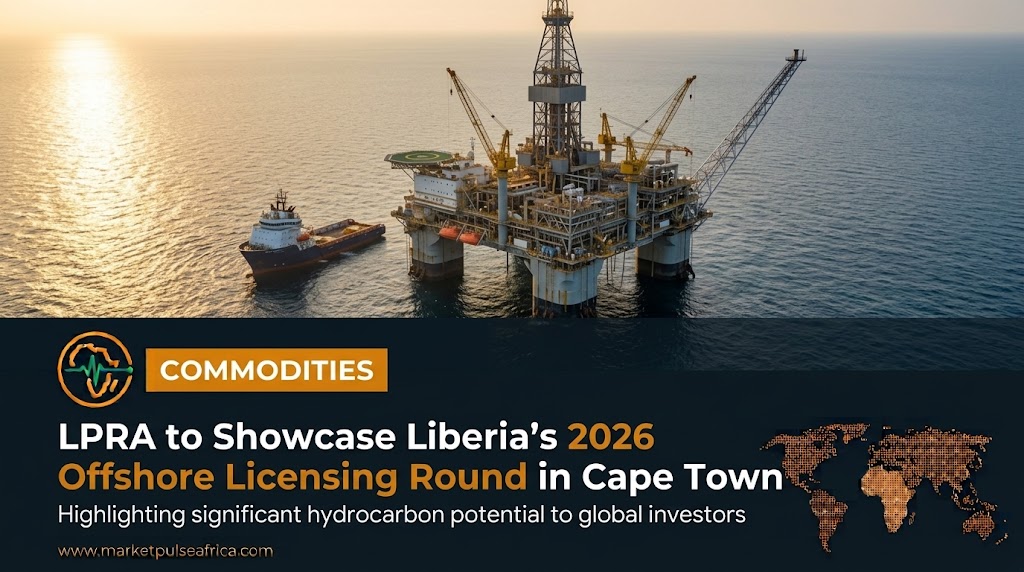
LPRA to Showcase Liberia's 2026 Offshore Licensing Round in Cape Town
Liberia is taking its latest bet on offshore oil to the continent's biggest energy stage. The Liberia Petroleum Regulatory Authority (LPRA) will formally showcase the country's 2026 Offshore Direct Negotiation Licensing Round at African Energy Week (AEW) 2026 in Cape Town, putting 29 offshore blocks and a newly expanded seismic data library in front of international investors at an event widely regarded as Africa's largest annual gathering for the energy sector.
What Happened
The licensing round, organized by Energy Capital & Power (ECP) in partnership with the LPRA, will be formally launched on October 14 at The Orchid, CTICC 2, during AEW 2026, which runs October 12–16 in Cape Town. The campaign will present 29 offshore blocks spanning the Liberia and Harper basins, backed by more than 80,000 square kilometres of seismic data, alongside what organizers describe as a growing pipeline of corporate interest.
Rather than running a conventional competitive bidding process, Liberia is using a direct negotiation model for this round, allowing qualified companies to advance individual technical and commercial proposals for specific blocks rather than submitting sealed competitive bids against one another. Prequalification for interested companies opened in August 2026, and by the time the round reaches Cape Town, LPRA Director General Marilyn T. Logan's agency arrives with its licensing framework already established and a modernized seismic library in place. The round is grounded in Liberia's 2014 Petroleum Exploration and Production Act and its 2019 amendments, which provide the legal basis for direct-negotiation petroleum agreements.
Historical Context
Liberia's push comes after what Energy Capital & Power describes as a rapid licensing overhaul: in less than two years, the country has attracted international supermajors, ratified eight production sharing contracts, and resolved an institutional dispute that had previously threatened investor confidence in its upstream sector. TGS Geoscience has pointed to the Narina oil discoveries in Upper and Lower Cretaceous plays as evidence that Liberia's offshore petroleum system is proven rather than purely speculative — a distinction that matters considerably for how international explorers assess frontier-basin risk.
Alongside the licensing reforms, the LPRA has worked to strengthen the institutional scaffolding around Liberia's petroleum sector: deepening regulatory cooperation with the United States, signing a strategic partnership with Ghana's Petroleum Commission, and working with Liberia's National Oil Company (NOCAL) to build judicial capacity for resolving petroleum disputes. On the infrastructure side, companies including TotalEnergies and BluEnergies have been expanding ports and petroleum storage capacity in the country, laying physical groundwork for the exploration activity the new licensing round is designed to attract.
Why It Matters for Africa
Liberia's approach illustrates a broader shift underway among several African frontier petroleum markets: pairing expanded, higher-quality subsurface data with more flexible, negotiation-based licensing structures, rather than relying solely on traditional competitive bid rounds that can struggle to attract interest in less-explored basins. For international oil companies weighing where to commit exploration capital, a direct negotiation model can lower the transaction friction of engaging with a frontier market, letting companies pursue specific prospects that match their technical interests rather than competing broadly against unknown rivals.
For West Africa specifically, a credible Liberian offshore sector would add another node to a regional upstream landscape already anchored by larger producers like Nigeria and Angola. Liberia's own track record — ratifying eight production sharing contracts in under two years and resolving a prior institutional dispute — is likely to be read by international investors as a signal of regulatory stability, a factor that often matters as much as geological promise when companies decide where to commit exploration budgets in frontier basins. Whether the 2026 round converts the showcase in Cape Town into signed agreements will be a meaningful test of how much that reform narrative has actually shifted investor sentiment.
Market Data & Key Numbers
Metric | Detail |
|---|---|
Offshore blocks on offer | 29 |
Basins covered | Liberia Basin and Harper Basin |
Seismic data available | 80,000+ km² |
Licensing model | Direct negotiation (not competitive bidding) |
Prequalification opened | August 2026 |
Production sharing contracts ratified (since overhaul) | 8 |
Launch event | October 14, 2026, The Orchid, CTICC 2, Cape Town |
Governing legislation | Petroleum Exploration and Production Act (2014, amended 2019) |
What Businesses and Investors Should Watch
Corporate uptake during and after AEW 2026, as the clearest early signal of how international explorers are responding to the direct negotiation model.
Progress on specific block negotiations, given that this structure allows companies to advance individual prospects rather than wait for a single bid deadline.
Further infrastructure investment from companies like TotalEnergies and BluEnergies, which could signal growing confidence in Liberia's offshore potential ahead of any new licensing outcomes.
Regional comparisons, particularly how Liberia's licensing terms and seismic data quality stack up against other West African frontier markets competing for the same pool of exploration capital.
Practical Guide: Key Takeaways
For Businesses
Oilfield services, logistics and port infrastructure providers should monitor Liberia's licensing round as a potential early indicator of future exploration activity and associated contracting demand.
Companies considering direct negotiation participation should factor in the qualification requirements LPRA has set, given the process differs meaningfully from a standard competitive bid round.
For Investors
Treat a licensing round showcase as an early-stage signal of government intent and available opportunity, not a guarantee of signed agreements or discovered reserves.
Compare Liberia's offshore fiscal and regulatory terms against other African frontier basins before assessing relative investment appeal.
For General Readers
A "direct negotiation" licensing round lets companies apply for specific blocks and negotiate terms individually, rather than competing in a single bidding process against all other applicants at once.
Liberia's offshore sector remains at a frontier stage — proven discoveries exist, but large-scale production has not yet been established.
How MarketPulse Africa Helps
Frontier oil and gas licensing rounds across the continent can be difficult to track without context on a country's regulatory history, infrastructure readiness and prior investor activity. MarketPulse Africa covers upstream developments across West Africa alongside our broader commodities and energy coverage, helping readers follow how announcements like Liberia's 2026 licensing round translate — or don't — into actual exploration and production activity.
Conclusion
Liberia's decision to showcase its 2026 offshore licensing round at AEW 2026 reflects a country betting that regulatory reform, proven discoveries and expanded seismic data can finally convert frontier-basin interest into signed agreements. With the formal launch set for October 14 in Cape Town, the coming weeks will show whether international explorers are ready to back that bet. Follow MarketPulse Africa for continued coverage of Liberia's offshore sector and the wider African energy licensing landscape.